

Where Innovation Meets the Oven: The Smart Kitchen Story Begins
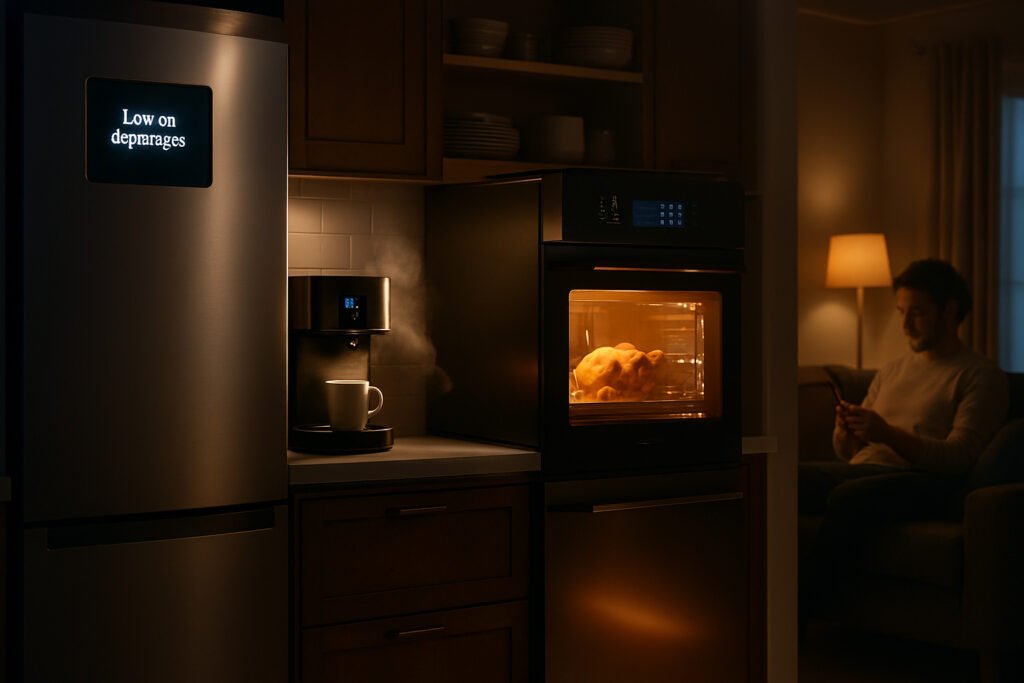
Picture this: it’s 5:45 p.m. on a Wednesday, you’re elbow-deep in a day that felt like leveling up in “boss fight” mode, your stomach’s doing that pit-drop thing (you know the one), and you realize the dinner you had grand plans for is now… well, chyme in the making. But then you press a button from your couch, swivel your phone, and voilà — your oven (which you pre-heated on your commute) is roasting chicken to perfection, your refrigerator (yes, your fridge) has pinged you: “Hey, you’re out of asparagus” and even your coffee maker’s asking casually: “Morning me wants cappuccino now?”
Welcome to the future of smart cooking in the kitchen — where you’re the hero, and the appliances are your loyal sidekicks.
In this blog post, we’re going deep into how smart kitchen technology is revolutionizing your cooking life, not just making it easier, but making it smarter, healthier, and yes — a heck of a lot more fun. I’ll walk you through the real why (science-backed reasons your health and wellness win), the fun part (my personal “oops” to “wow” story with a smart oven), the how-to (integrating smart appliances into your life without setting off the fire alarm), and the what-to-buy (high-ticket smart appliances that actually deserve a prime spot in your kitchen). Stick around — because by the end you’ll want to kick your old microwave to the curb and pledge allegiance to the connected kitchen era.
So grab a snack (or let your smart “snack maker” prepare it) — we’re about to cook up something awesome.
Why Smart Kitchen Appliances Matter: Health, Wellness & You
Let’s pause for a second and talk about something a little less glamorous than the “voice-commanded air fryer,” but infinitely more important: your health. Because when you invest in smart cooking appliances, you’re not just buying gadgets — you’re buying potential for better wellness, better eating habits, and better culinary life.
Science-backed reasons

Precision cooking = better nutrient retention
Smart ovens, smart cooktops, and smart multicookers use sensors and algorithms to optimize temperature, timing, and cooking method. That means less overcooking, less nutrient loss, and more of the good stuff (vitamins, minerals) staying intact. Anti-oxidants hate high heat; precision helps them hang around longer.
Also, one recent study on IoT-enabled kitchen appliances found they optimize nutrition and enable precision cooking — a nod that smart cooking tech isn’t just convenience-fluff but has tangible health implications. ScienceDirect+1Increased home-cooked meals = better diet
It’s no secret: eating homemade meals tends to be healthier than relying on fast food, takeout or TV dinners. Smart kitchen tech cuts down the barrier to cooking at home: less stress, less guess-work, fewer mistakes. One article noted that smart kitchen devices encourage cooking at home, which often results in healthier eating habits. Wipro Appliances+1Waste reduction = mindful consumption
When your smart fridge tells you veggies are about to expire, or helps you track inventory, you’re less likely to toss spoiled produce (and less likely to replace it with some processed food fallback). The eco-win also translates into a wellness win: when you’re organized, you’re more likely to eat what you planned rather than defaulting to unhealthy options. For example, IoT-based connectivity in kitchens helps track expiration and reduce waste. foodHQ+1Energy/efficiency = stress reduction
It sounds a little indirect, but hear me out: less stress = better health. Smart appliances monitor energy use, ensure you’re not burning more power (or food) than needed, and let you cook with confidence. One vendor site notes that smart appliances help with “saving time, energy, and money.” Silicon Labs When you feel calmer in the kitchen, you’re more likely to set the table, linger over a meal, and enjoy the ritual — which matters for mental wellbeing.Safety and monitoring = fewer mishaps
Smart stoves or cooktops might detect overheating, send you notifications, shut off automatically. That means fewer “uh oh” kitchen fires, fewer panic-moments, and a safer environment. When your body and mind aren’t on alert dealing with lurking hazards, that’s a wellness plus. Articles outlining IoT kitchens list safety features (gas leak detection, smoke sensors) as a benefit. Interio Group+1
What this means for you
Imagine this: your day’s already been hectic. You get home late, you’re hungry, you glance at the fridge, wonder what’s salvageable, resign to ordering in. But now your smart fridge already flagged the chicken thawed and ready, your smart oven was scheduled to preheat at 6 p.m., your multicooker is quietly slow-cooking tomorrow’s lunch while you binge your favorite show. You avoid the drive-thru. You eat something wholesome. You feel accomplished. You sleep better. You wake up ready. That domino effect? It matters.
And yes — the kitchen doesn’t feel like a battleground. It feels like your domain. Which, by the way, is also a huge wellness boost (in my humble philosopher-chef opinion).

My Personal Smart Appliance Story (Spoiler: It Was a Mess Before)
Let’s get real: I used to hate cooking nights. It was chaos. I’d show up exhausted, open the fridge, rummage through mystery leftovers, plug something into the oven that may or may not preheated, rinse and repeat. Then there was the time I forgot the oven on, ended up with burnt broccoli fumes filling the house, and the cat judging me from the doorway. That was real.
Enter the smart oven. I’ll point out I’m no “gadget freak” — I just wanted cooking to stop feeling like I’d signed up for a firefighting course. So I loaded this beast: It syncs with my phone, has presets for roasting, air-frying, baking; a meat thermometer built in so I didn’t have to jam a probe in blind; and cleanup mode that didn’t demand hours of scrubbing. (Yes, this device exists — check it out later.)
Here’s how my life changed:
Pre-scheduled preheat: On the way home I tap “start preheat” on my phone. I walk in, plug in vegetables, roast chicken’s already at optimal temperature. No waiting, no “dang it still cold” moment.
Smart presets: I choose “roast chicken + veggies,” the appliance handles time+temp, reminding me when to flip the bird (I mean chicken). Every time it’s done right. Not “a little raw inside” or “burnt on the edges.”
Meat thermometer alerts: I used to overcook chicken out of fear of bacteria. Now the oven pings “done” at the perfect internal temp. Juicy, safe, no panicking.
Cleanup mode: After dinner, I tap self-clean. While appliances run, I pour a glass of wine (okay, decaf tea) and scroll through socials. One less chore looming.
Confidence boost: I started cooking more. Tried new recipes. Friends asked what changed. I said “I got an oven that actually cares.”
Health win: Because cooking’s easier, I eat home-cooked meals more often. The fridge and oven collaborate. The days of defaulting to takeout? Fewer. My body and wallet are both giving me side-high-fives.
So yes — for me, the smart oven wasn’t just a luxury. It was the gateway to a smarter kitchen mindset. It turned cooking from “meh, a chore” to “hey, I got this.” And the ripple effect: better meals, less waste, happier person.
The Benefits of Smart Kitchen Appliances (in Relatable Terms)
Okay, let’s break it down to everyday life. What does having smart kitchen appliances feel like and deliver?
Time-saving (aka more “me time”)
Let’s face it: cooking is often the bottleneck of dinner plans. Smart ovens, smart multicookers, smart slow-cookers can be pre-programmed, remote-controlled or voice-activated. That means: you’re prepping salad while the main dish is preheating, you’re throwing ingredients in while you’re checking email, you’re not hovering over the stove watching for a boil-over. As noted in articles on smart kitchens: they make cooking faster and more efficient.
Precision cooking (aka fewer kitchen fails)
You know those moments: you try a “new recipe” that ends up half-raw, half-burnt, full of regret. Smart appliances with sensors and presets remove the guesswork. Baking? The temperature is right. Air-fry? It’s crisp without char. One source says smart appliances deliver “consistent results” thanks to better controls.

Automation (aka you do less, enjoy more)
Imagine: you set it, you forget it. Slow cooker starts by itself, oven shuts off when done, fridge buzzes when you hit the wrong temperature, coffee maker fires up on cue. That frees up you to focus on something better — maybe conversation, maybe dessert, maybe the cat’s Instagram account. The connectivity of smart appliances helps with this automation. Silicon Labs+1
Energy/efficiency and sustainability (aka good for you, good for planet)
When appliances are smarter, they use less needless energy, avoid overcooking (which wastes food), and help manage standby power. One article mentions smart appliances help save time, energy and money. Silicon Labs+1 Your utility bill might not drop by the moon, but your eco-karma gets a boost and your wallet doesn’t pay for burnt dinner.
Health and nutrition (aka upgrade to your diet)
Smart kitchens make home-cooked meals more likely, help reduce food waste (so you’re less likely to default to junk), and offer features like ingredient tracking, meal planning, even nutritional suggestions (in some cases). For example: IoT in the kitchen can act as a “personal nutritionist” by tracking what’s inside and helping you cook healthier. foodHQ+1
Safety and peace of mind (aka fewer kitchen blunders)
Stove left on? Not on your watch (or your phone). Gas leak? Smoke detection? Smart sensors have your back. The risk of kitchen mishaps drops. One article highlights that smart kitchens include gas leak detectors, smoke sensors, appliance monitoring. Interio Group+1
How to Integrate Smart Appliances Into Your Kitchen (Without Losing Your Mind)
You wouldn’t drop a space-ship into your kitchen without planning the runway. Same goes for smart appliances. Here’s a game plan (with humor) to integrate them seamlessly.
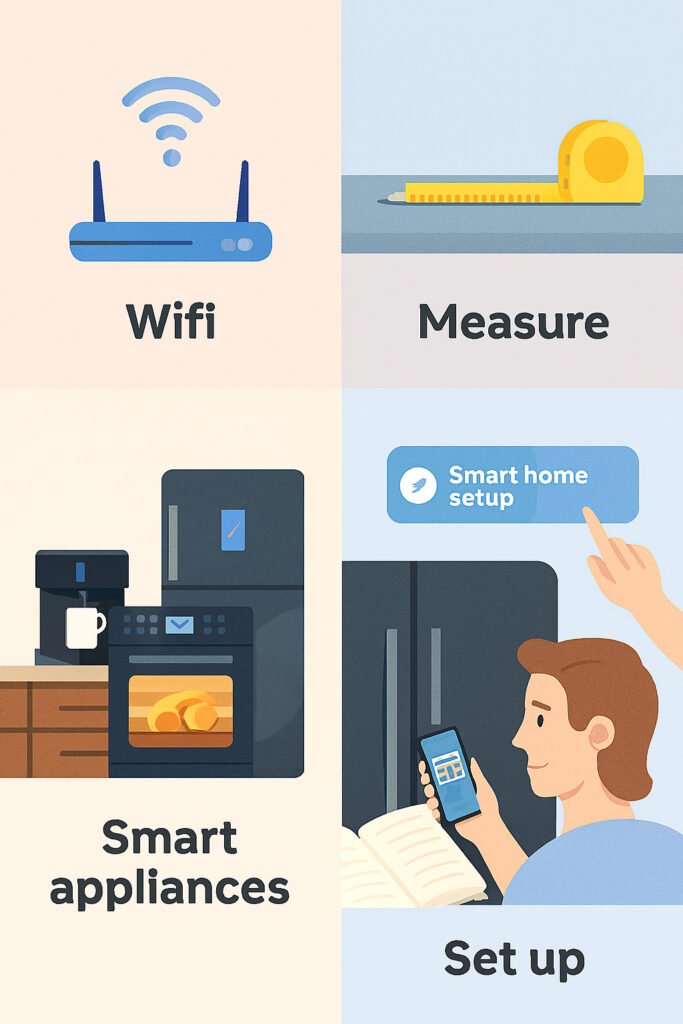
Step 1: Assess your connectivity
Your smart gadgets rely on WiFi or Bluetooth. If your kitchen is the “dead zone” in your house (hello, microwave shield), consider a WiFi extender or mesh system. One article reminds us: weak signal = appliance frustration. Silicon Labs
Step 2: Evaluate layout & space
Measure your current appliances, ensure the new one fits, has proper ventilation, and doesn’t make your kitchen feel like Tetris. Big range? Needs room for the door to swing. Smart fridge? Depth matters (counter-depth vs standard).
Step 3: Check ecosystem compatibility
Are you an Alexa household? Google? Apple HomeKit? Make sure your new appliance “plays nice.” Look for compatibility in the spec sheet.
Step 4: Learn the features (yes, take 10 minutes)
Smart features only shine if you use them. Read the manual or watch the tutorial. Set up the alerts, connect the app, explore the presets. Even a coffee maker is smarter when you schedule it.
Step 5: Start one smart device, then expand
You don’t need to upgrade everything at once. Maybe start with the refrigerator, get used to the smart features, feel the benefit. Then add the oven or pressure cooker. Build your smart kitchen like levels in a game.
Step 6: Maintenance & firmware updates
Yes, even your oven has updates now. Keep your appliance firmware up to date (bug fixes, security). Clean sensors, check connections. As one challenge article noted: maintenance and connectivity issues are real for smart appliances. Wipro Appliances+1
Common Challenges & How to Tackle Them (Yes, There Are a Few)
Let’s be honest: every tech upgrade has a few bumps. Smart appliance adoption is no exception. But good news: you can prepare for them.
Connectivity problems: If your WiFi is spotty, appliances can lag, not sync, or fail to get updates. Fix = stronger router, mesh network, or closer placement.
Learning curve: You may feel like you need to read a mini-degree to cook with your smart oven. Solution: start simple, use presets, gradually explore advanced functions.
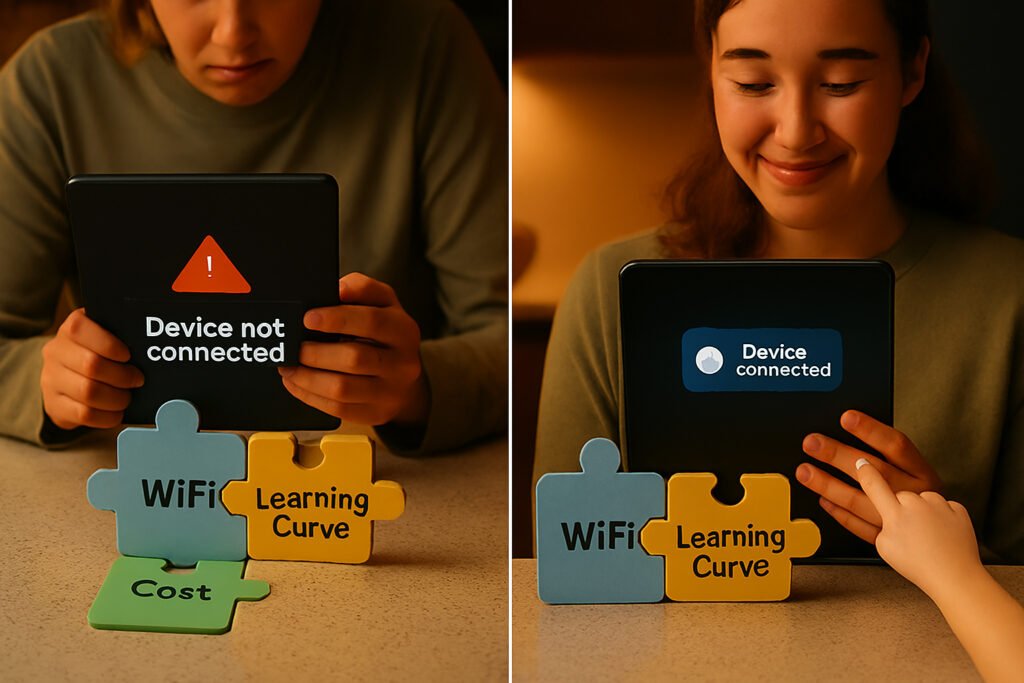
Cost vs. value concern: Smart appliances cost more. But think long-term: less waste, better meals, more home cooking. The value may surprise you.
Maintenance/updates: Smart means software and sensors. You’ll need to update firmware, calibrate occasionally, check connectivity. Make it part of your kitchen routine (yes, there is one now).
Compatibility issues: If you mix brands willy-nilly, you might get devices that don’t talk to each other. Try to stay within one ecosystem as much as possible.
Cost vs. Value: Are Smart Appliances Worth It?
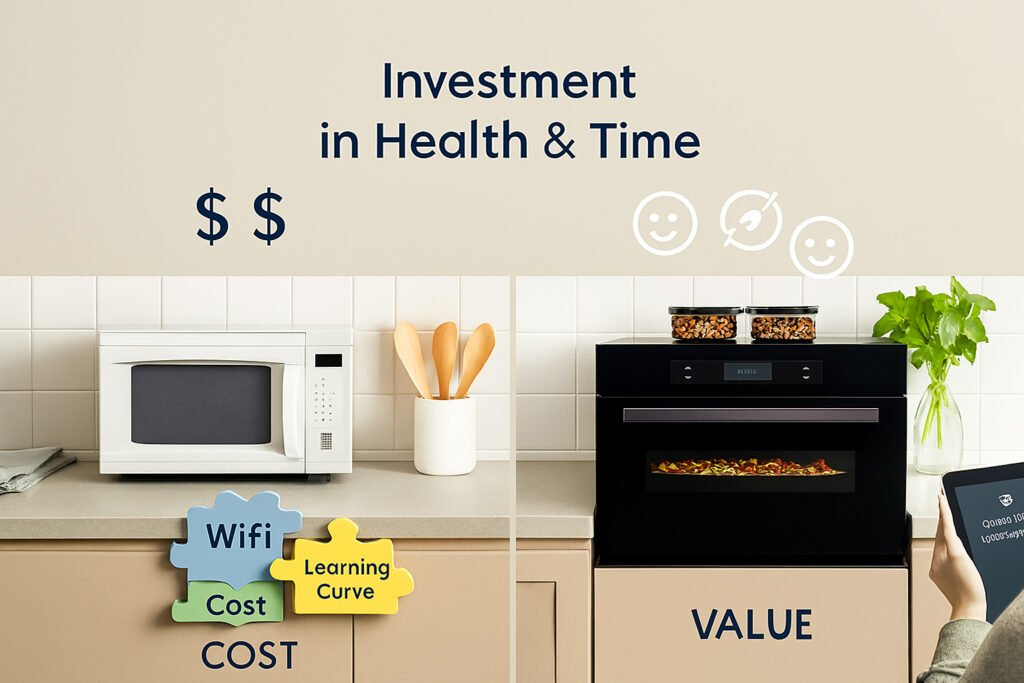
Short answer: yes — but with caveats. Let’s talk dollars, sense, and value.
The cost side
High-ticket smart appliances live in the thousands of dollars. They cost more upfront than “dumb” counterparts. E.g., smart fridge with AI features? Premium pricing.
The value side
You save time (which is money, and sanity).
You reduce waste (food, energy).
You get better cooking results (which feeds into intangibles like pleasure, health).
You fix habits (eating better, cooking more).
You get increased convenience (which reduces friction and stress).
Articles about smart kitchens note that many consumers find the extra features — convenience, automation, energy savings — justify the cost. Wipro Appliances+1
The smarter investment approach
Rather than buying everything at once, pick one key appliance that will deliver the highest “pain-point relief” for your kitchen. Then scale. That way, you let the benefit accumulate and justify the cost.
The intangible benefit
There’s a boost to “kitchen confidence” — you feel more in control, more capable, more likely to cook instead of avoiding. That ripple effect isn’t measured in watts or dollars, but in quality of life. And if we’re being honest: that’s worth a lot.
The Future of Smart Kitchen Technology
Heads up: if you think smart fridges and ovens are the “peak,” wait till you see what’s coming. The tech is evolving fast.
AI & machine learning will allow appliances to learn your habits, suggest recipes based on what’s in your fridge, adjust cooking styles based on your taste patterns. One report says smart kitchens will include “personalized nutrition plans” and “robotic kitchen assistants.”
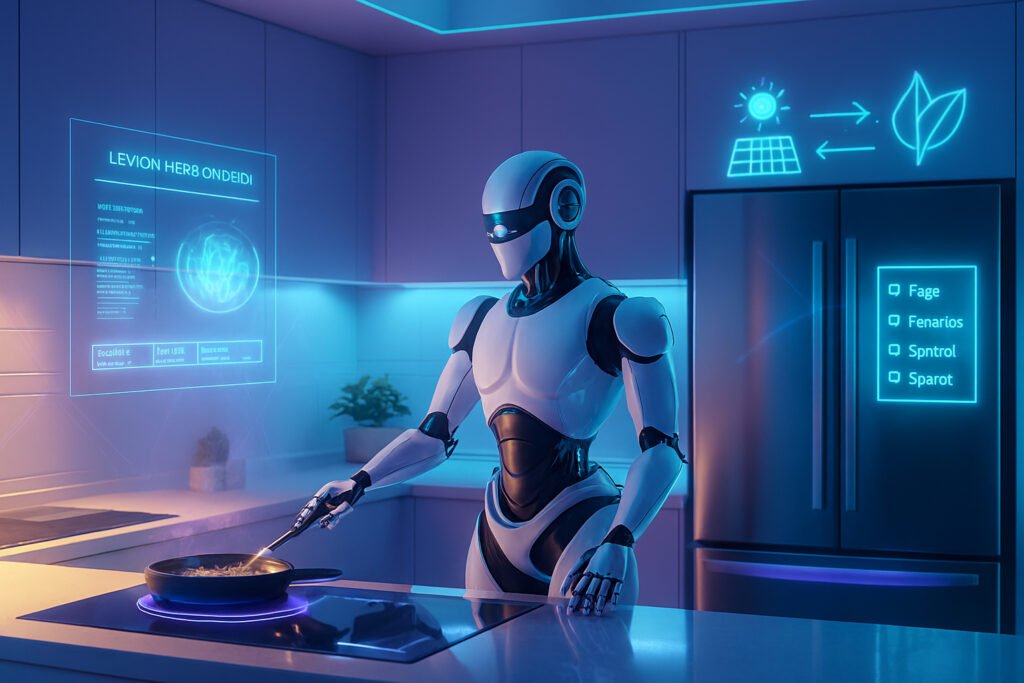
Connected ecosystems: Your oven, fridge, cooktop, even countertop devices will coordinate. E.g., fridge signals oven what you’re cooking, oven pre-adjusts, cooktop pre-heats.
Sensor overload (in a good way): Fridges will consider freshness, food spoilage; cookers will detect doneness via cameras; your whole kitchen will be aware.
Sustainability integrated: Smart appliances will optimize for energy, connect to your clean-energy systems (solar etc), and minimize waste in ways that aren’t just convenience but virtue.
Voice & augmented reality: “Hey Alexa, what’s in the oven?” “Here’s what’s inside your fridge.” We can expect more hands-free control and possibly AR overlays for recipes.
In short: Investing in smart appliances now doesn’t just fix your current kitchen problems — it sets you up for the next decade of living smarter.

The Bottom Line
If you’re still cooking like it’s 1999 (microwave on, crumbs on the counter, take-out box glowing ominously on the island), it’s time for a radical shift. The smart kitchen revolution is here — not just for “luxury chefs,” but for you, your schedule, your health, your life.
With smart kitchen appliances you gain: better meals, less waste, more time, less stress, and a kitchen that functions with you instead of against you. You start cooking confidently, eating intentionally, living smarter. The high-ticket price? Yes. But it’s truly an investment — in your health, your lifestyle, your future.
So here’s the call to action: don’t wait. Browse the high-ticket smart appliances above (yes: fridge, oven, pressure cooker — pick your first). Evaluate what’s keeping you up at night when you think of dinner. Then choose your smart upgrade. Buy it. Set it up. Let it become the sidekick your cooking life has been missing. You’ll look back a few months from now and wonder how you ever lived without it.
Your kitchen deserves to be revolutionary. You deserve to cook smarter, eat better and reclaim your time. So go ahead… future-proof your kitchen — and your lifestyle.
Happy cooking (with a smile, knowing an oven is doing the heavy lifting).
Frequently Asked Questions
Top Smart Kitchen Appliances Worth Your Attention
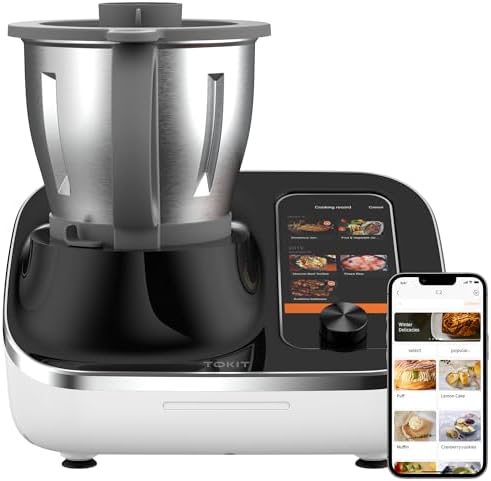
Okay, enough theory. Let’s talk stuff. If you’re ready to step up your kitchen game, here are some smart appliances worth your serious consideration. These are not budget throwaways — these are investments in your kitchen (and your wellness).


AFFILIATE DISCLOSURE
themindsparkcollective.net is a participant in the Amazon Services LLC Associates Program, an affiliate advertising program designed to provide a means for sites to earn advertising fees by advertising and linking to Amazon.com.
I may earn a small commission for my endorsement, recommendation, testimonial, and/or link to any products or services from this website.
Last Updated on October 31, 2025 by The Mindspark Collective