
- 🧠 The Wake-Up Call: When “Working From Home” Turned Into “Sitting From Home”
- ⚠️ The Hidden Pain of Sitting Too Long
- 🤔 The Mental Wake-Up Call
- 💡 The Science: Why Movement Boosts Your Mind
- 🧍♀️ Step-by-Step: How to Stay Active When You Work from Home
- 🪑 My Personal Turning Point
- 🧭 Additional Tips for Staying Active Without Overwhelm
- 🏁 The Bottom Line
- Frequently Asked Questions
- 🛍️ Recommended Amazon Essentials
🧠 The Wake-Up Call: When “Working From Home” Turned Into “Sitting From Home”
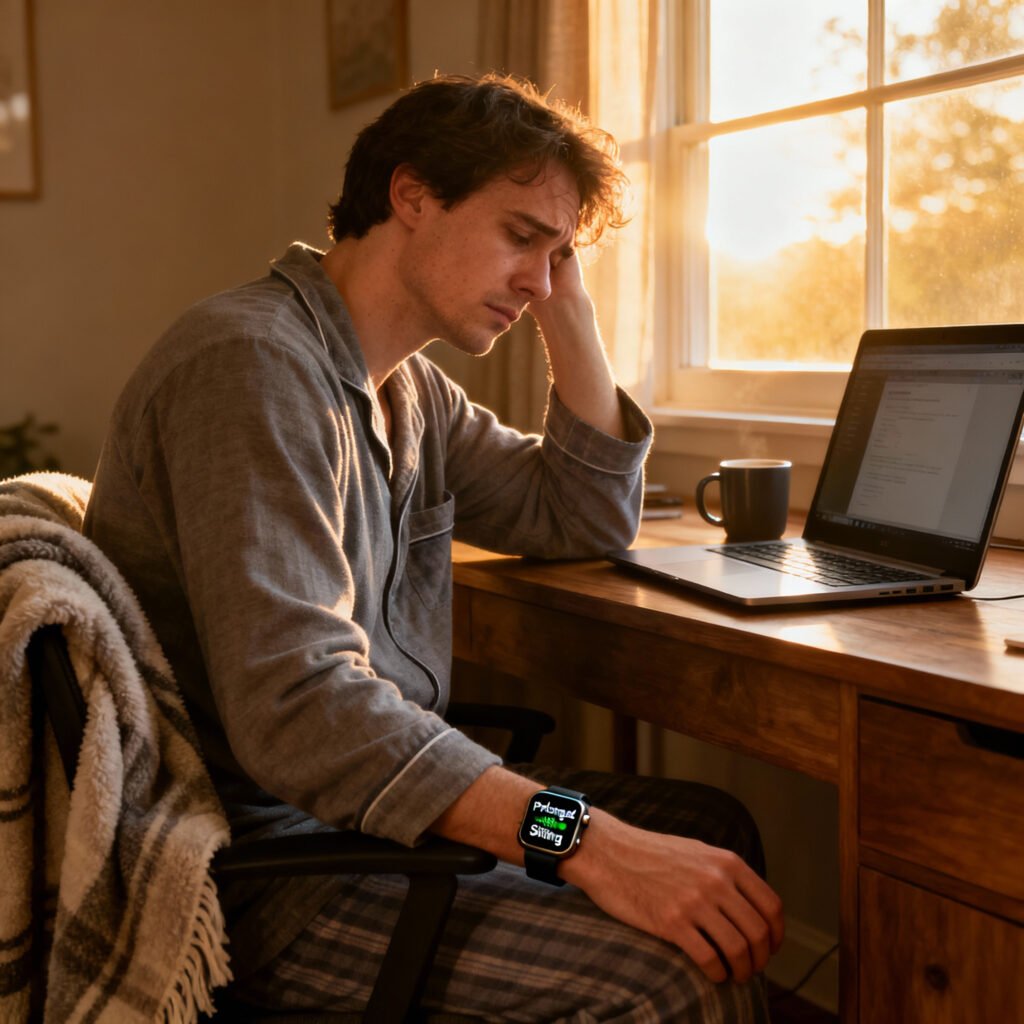
I’ll never forget the day my smartwatch betrayed me. I was deep into an intense work session, fueled by caffeine and that false sense of productivity you get when wearing pajama pants and a blazer. Then, out of nowhere, my watch buzzed with that cheery little reminder: “Time to stand up!” Like, really? After eight hours glued to my chair, I got a nudge from my own wrist to, well… move?
Except when I checked the stats, I realized I’d been sitting for eight straight hours — no movement, no stretch, just me, my coffee, and an ever-growing to-do list that looked more like a novel at that point. Sound familiar?
Working from home has its perks — pajamas all day, flexible hours, unlimited snack access — but it also comes with a sneaky side effect: we barely move anymore. My back was sore, my energy flat as the soda I spilled on my keyboard, and by 3 p.m., I was seriously wondering if “lying on the floor” could count as a form of yoga. Spoiler alert: it doesn’t, but it’s a great nap position.
That’s when I knew something had to change.
⚠️ The Hidden Pain of Sitting Too Long
Most remote workers don’t realize just how sedentary we’ve become. According to the American Heart Association, the average person working from home now sits over 10 hours every day. Yikes.
And it’s not just about stiff muscles or an awkward neck crick from that Zoom camera angle that nobody warned you about. Prolonged sitting is linked to some seriously nasty problems:
Reduced blood flow and sluggish metabolism, which means your body becomes slow — not unlike your computer when too many tabs are open.
Back and neck pain from poor posture, a combo that makes you want to crawl into a box or invest in an expensive chiropractor ASAP.
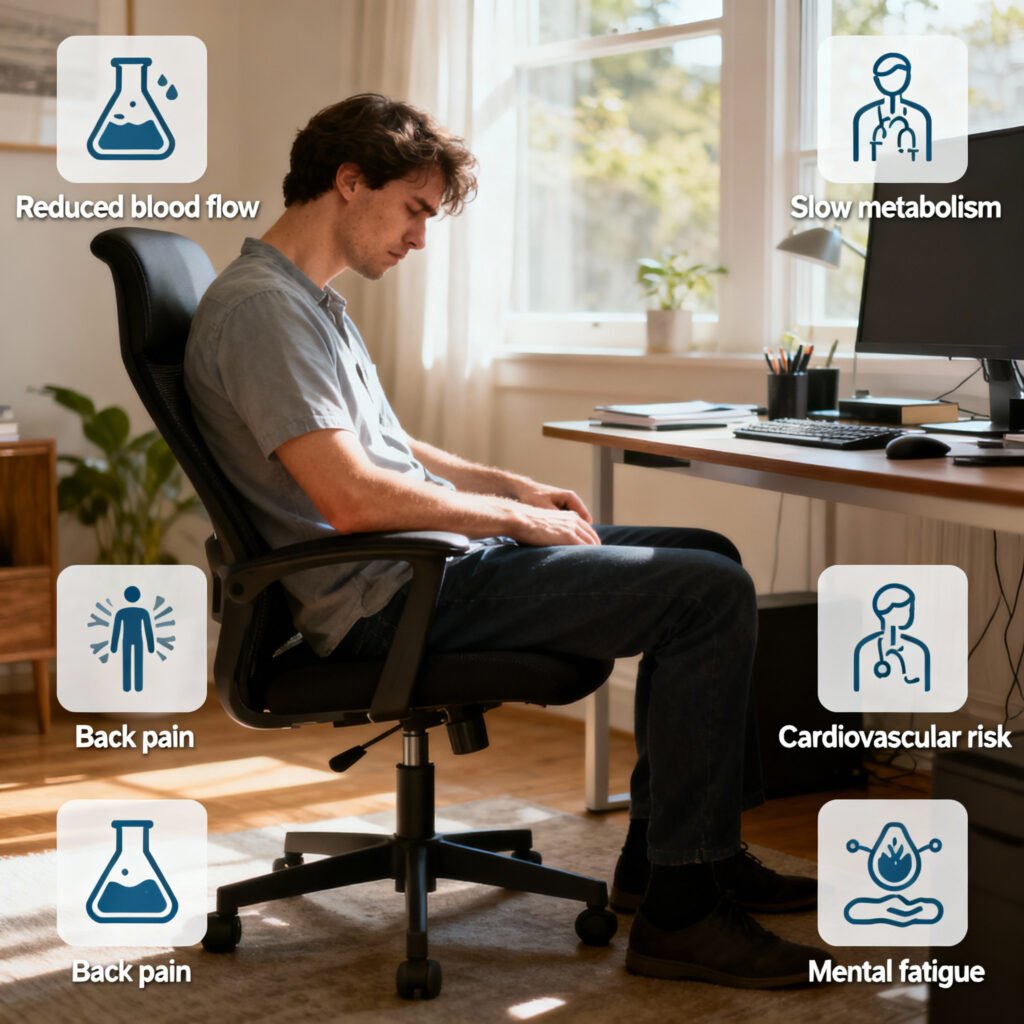
Increased risk of obesity, diabetes, and cardiovascular disease.
Mental fog, fatigue, and burnout that hit before you even realize you’re in trouble. Ever felt tired but couldn’t sleep, restless but too wiped to move? That vicious cycle is common and brutal, like your chair has glued you down.
One day, I read that sitting too long can literally shorten your lifespan. That hit me like an ergonomic chair flung across the room. I wasn’t just tired — I was training my body to age faster than my favorite avocado sitting on the counter.
🤔 The Mental Wake-Up Call
So I had to ask myself the hard question: “If I don’t move my body for eight hours straight, how do I expect my brain to keep performing at 100%?”
Our minds and bodies are connected — not a surprising fact, but easy to forget when the couch is whispering sweet nothings every hour. When one slows down, the other follows. That was my lightbulb moment. I didn’t need a gym membership or personal trainer; I needed a movement mindset.
💡 The Science: Why Movement Boosts Your Mind
Here’s what the research says: A 2023 Stanford study showed people who incorporated “micro-movements” — small activity bursts every hour — experienced up to 40% higher focus and productivity compared to those who sat all day.
Another fascinating study from the University of Illinois found that brief physical activity triggers new neuron growth in the hippocampus — the brain center responsible for memory and creativity. So moving isn’t just good for your body; it literally rewires your brain.

Movement increases blood flow, oxygen, and dopamine — our brain’s feel-good neurotransmitter. Even simple acts like standing up or pacing during phone calls can recharge your nervous system and reset stress levels. Translation: you don’t need a gym, just the smarts to move more.
🧍♀️ Step-by-Step: How to Stay Active When You Work from Home
Let’s make this realistic — not a “wake up at 5 AM and do yoga on the balcony” plan, but small, doable habits you can actually keep without feeling like a fitness influencer.
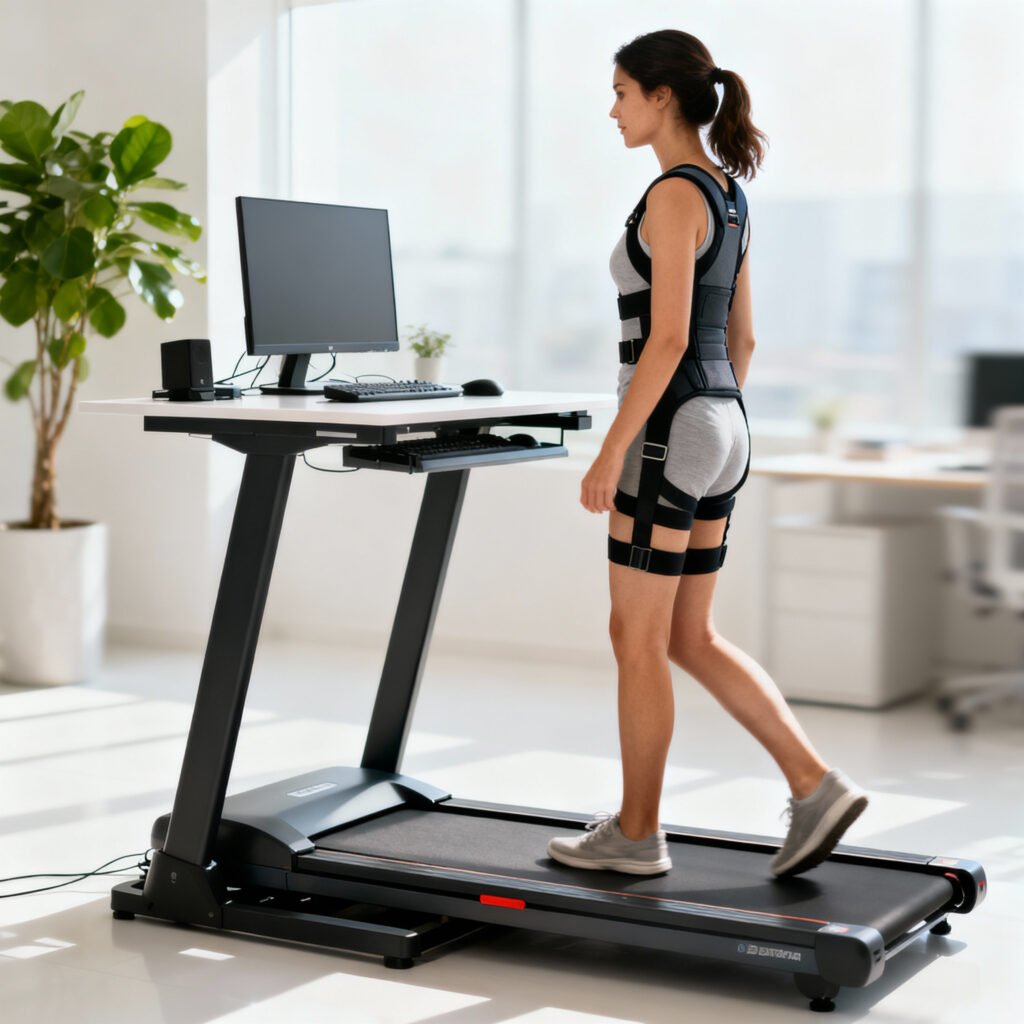
1. Create a Movement-Friendly Workspace
When I upgraded my home office, it wasn’t with fancy decor or eight types of succulents — it was with movement tools. Here’s what changed everything for me:
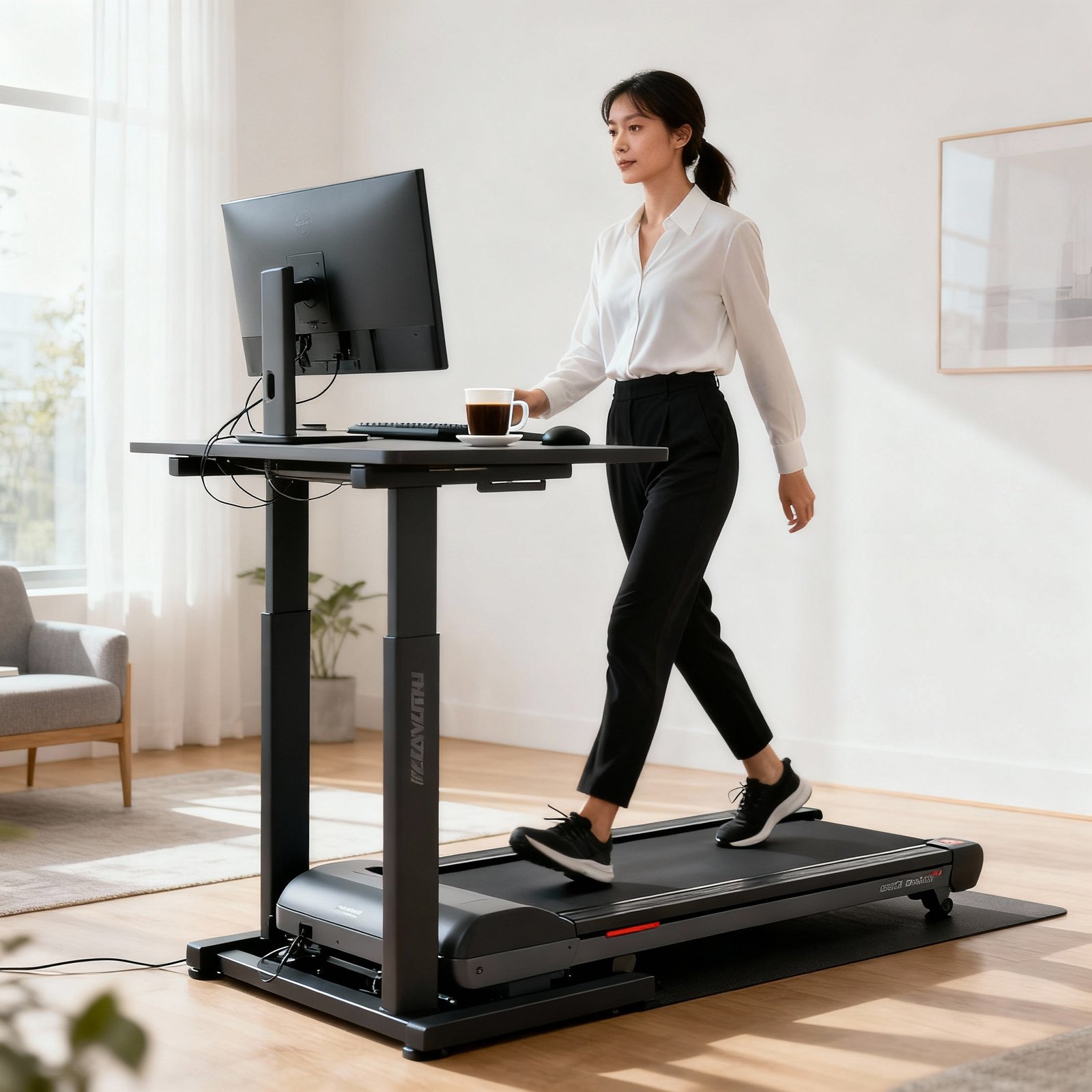
- ✅ Under-Desk Treadmill: Imagine walking slowly while answering emails or on calls. It’s quiet, compact, and shockingly addictive. I started with just 20 minutes a day — now I average 5,000 steps before lunch, and it beats pacing around the kitchen waiting for my coffee.
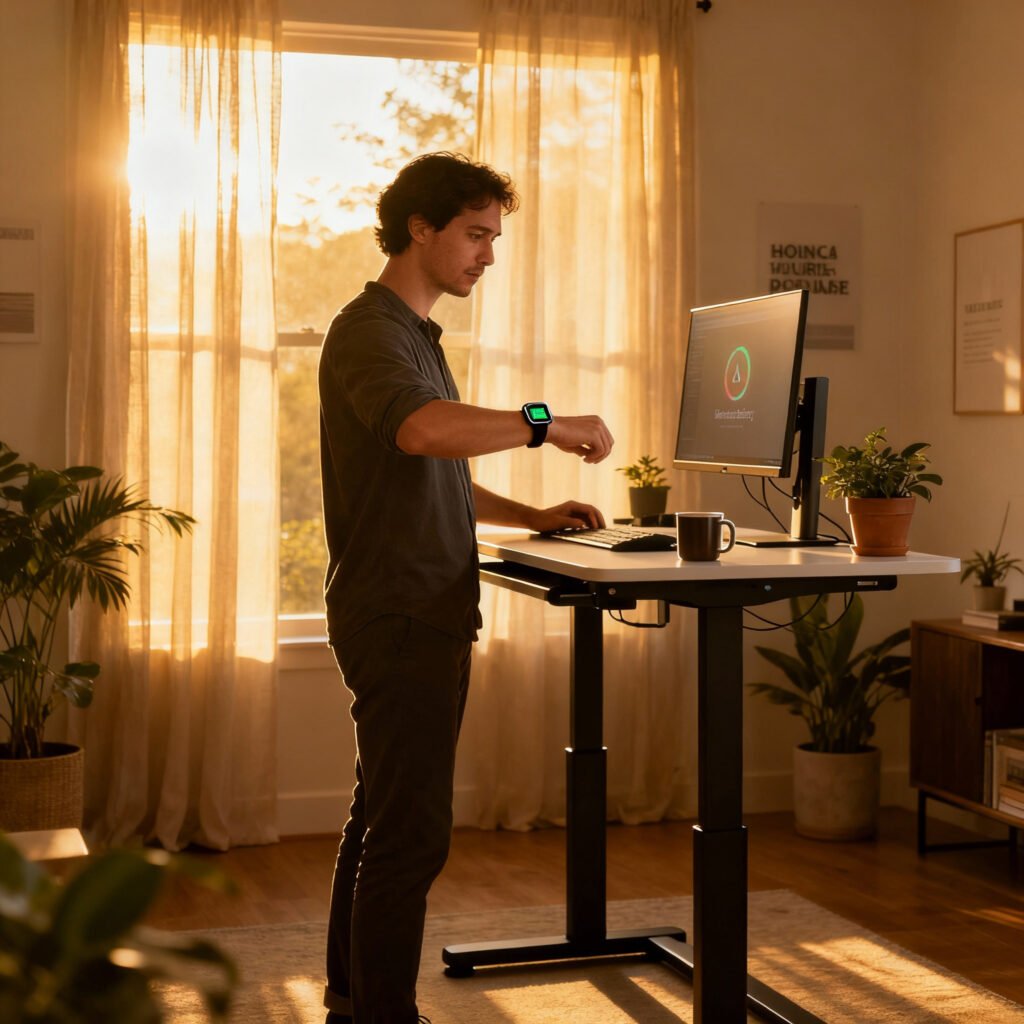
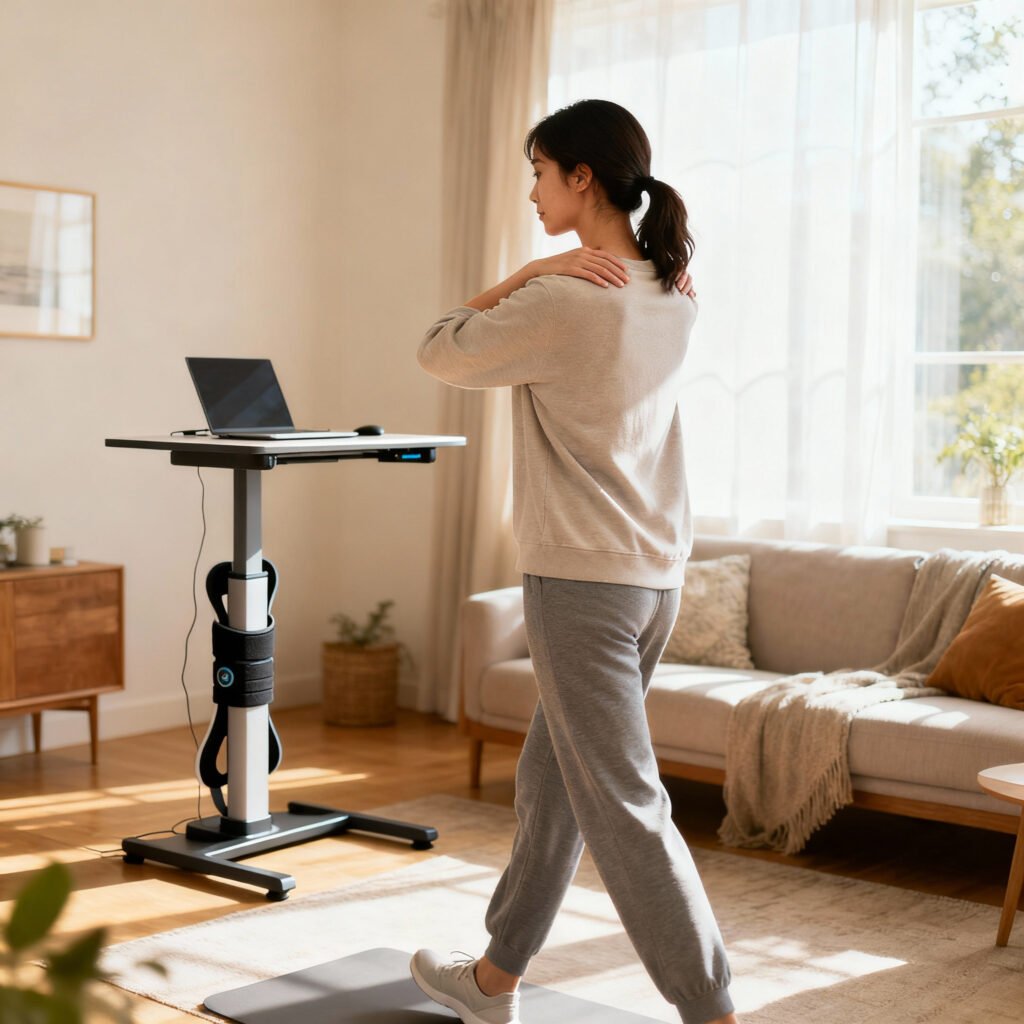
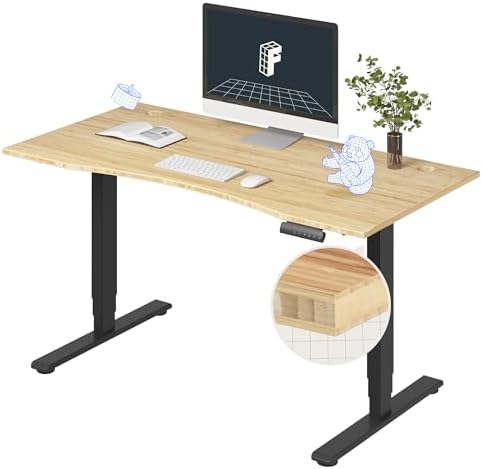
- ✅ Standing Desk Converter: This simple setup lets you switch between sitting and standing quickly. Within a week, my chronic back pain had dropped drastically, and my energy lasted longer into the afternoon. Plus, standing makes you feel like a productivity wizard (good for morale).
✅ Posture Corrector: Think of it as a gentle tap on your shoulder telling you to sit up straight. I wear mine during meetings and instantly notice when I start slouching into a hunch. Pro tip: position your monitor at eye level and keep your shoulders relaxed. Ergonomics isn’t a luxury; it’s self-preservation.
2. Move in “Microbursts”
Forget hour-long workouts. The best thing you can do for your body is move often, not intensely. Try these “movement snacks” — two to three minutes of light activity every hour:
Shoulder rolls while your coffee brews.
Ten squats between emails.
Calf raises while waiting for a file to upload.
Torso twists during calls.
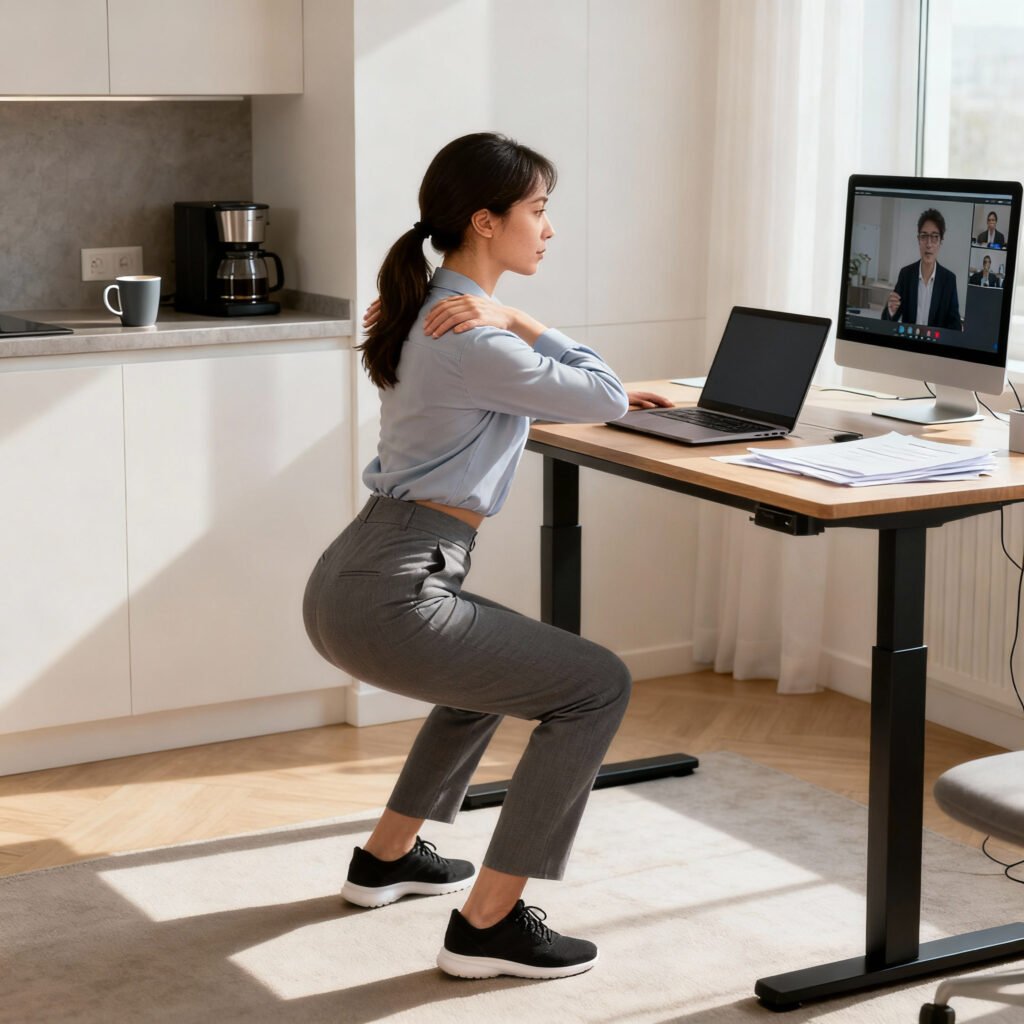
It might sound trivial, but these micro-movements help regulate blood sugar, reduce cortisol (the stress hormone), and keep your energy stable. After a few weeks, I stopped reaching for that third coffee by 2 p.m. My body felt more awake, even while doing mostly sedentary work.
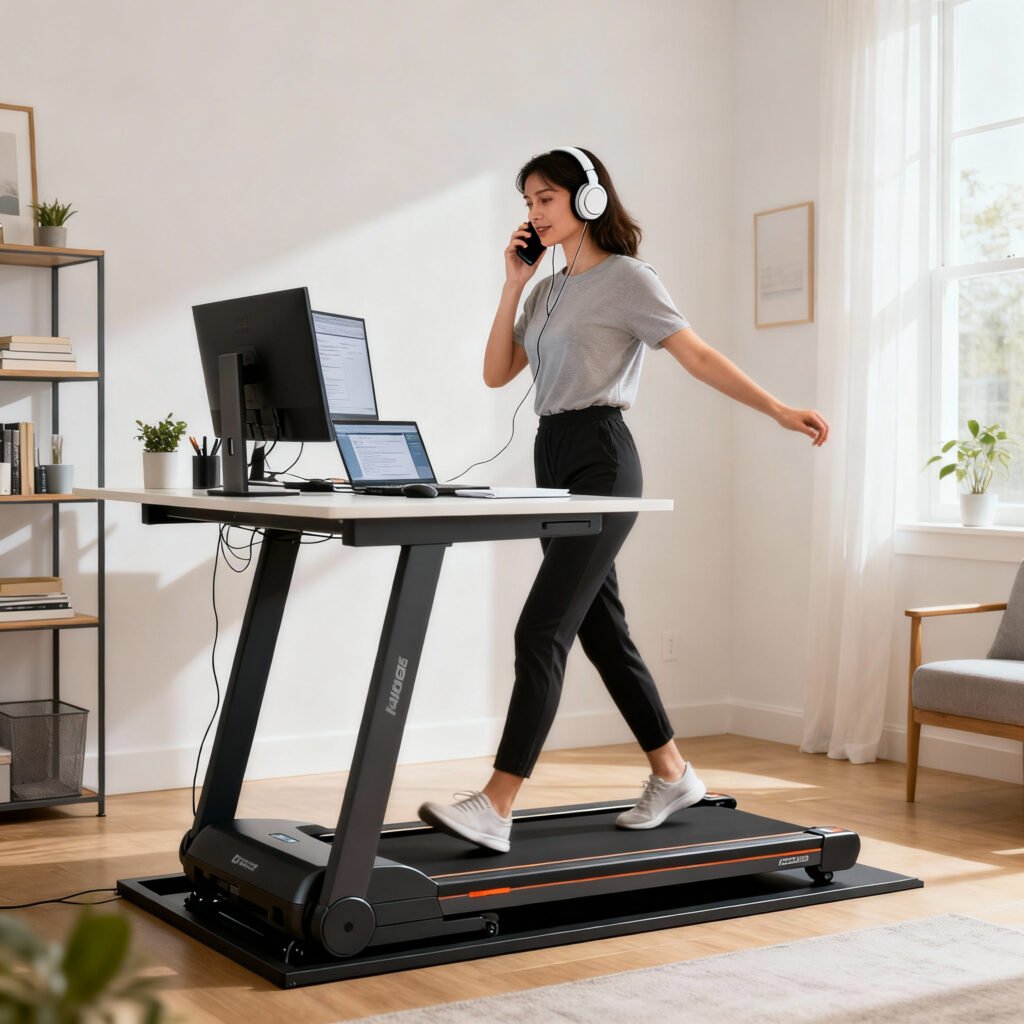
3. Turn Routine Tasks Into Fitness Moments
Movement isn’t a break from work; it can be part of your workflow.
Take phone calls standing or walking.
Stretch after sending every big email.
Listen to podcasts while walking on your treadmill.
My personal favorite is “The Email March.” Every time I clear my inbox, I take a quick lap around the room. Silly? Maybe. But those steps add up, and it feels great turning productivity into physical activity.
4. Follow the 50/10 Rule
Work for 50 minutes, then move for 10. It’s just long enough to get deeply focused and short enough to prevent burnout.
Use those 10 minutes to:
Refill your water bottle.
Do a few stretches.
Step outside for a bit of sunlight.
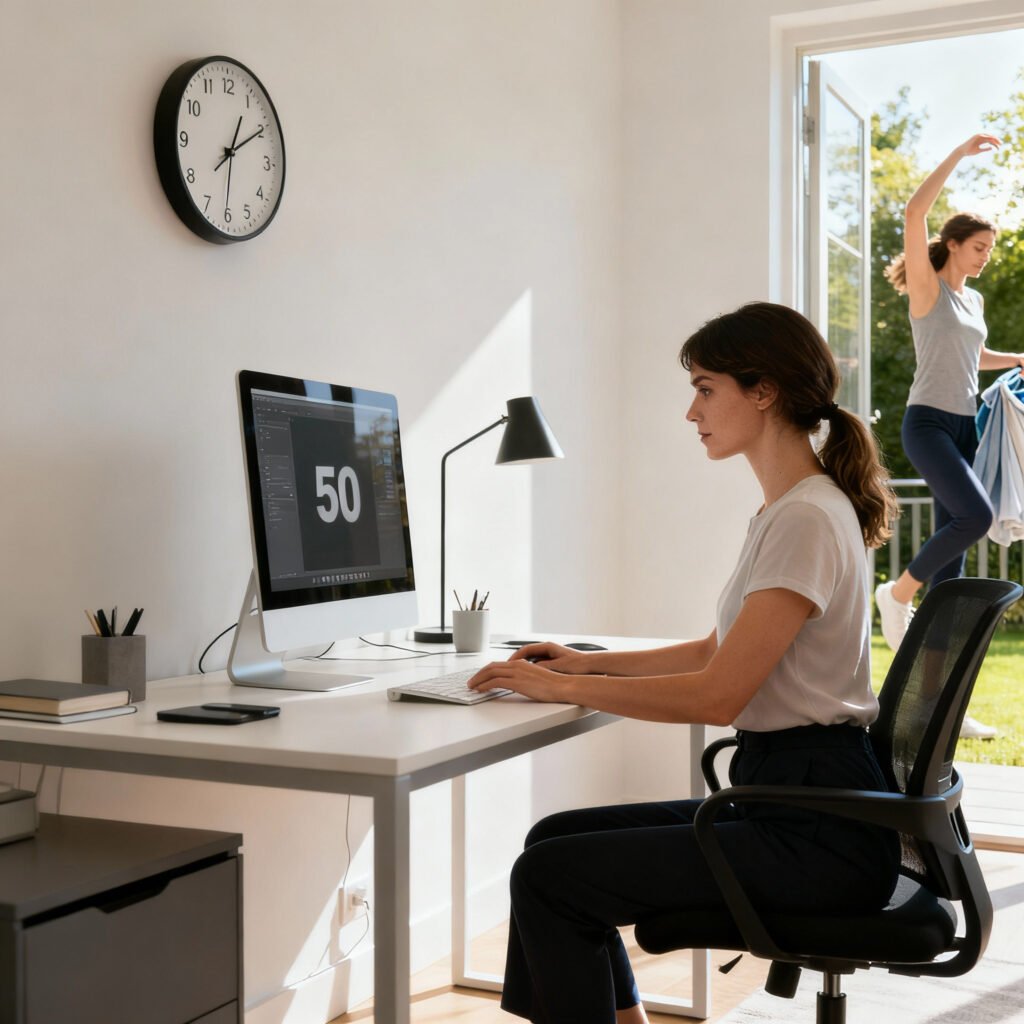
Fold laundry or tidy your space.
This mini-reset often gives you more mental clarity than another cup of coffee. Fun fact: A Harvard Business Review study found workers who took regular movement breaks were 23% more focused and emotionally resilient than those who didn’t.
5. Reward the Effort
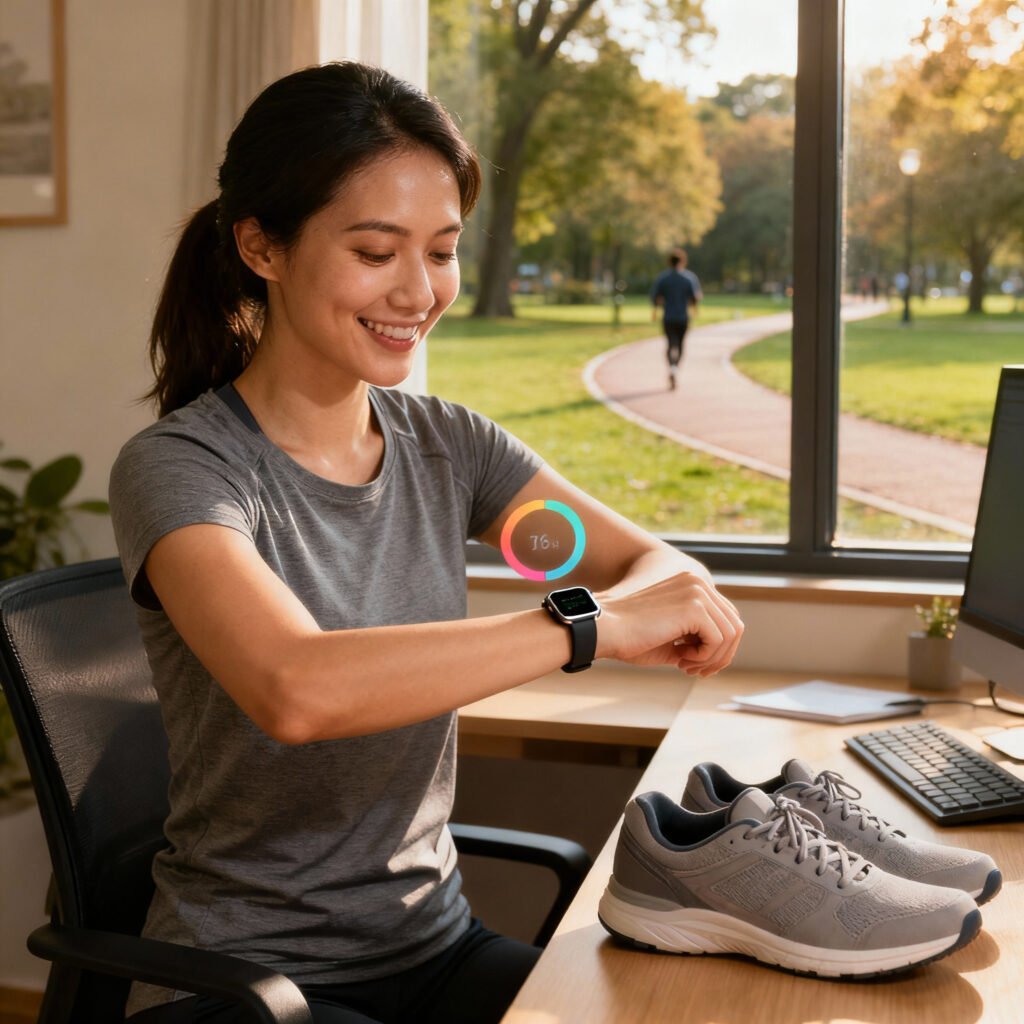
Motivation follows action — not the other way around. I track my daily “stand hours” with my smartwatch and find it oddly satisfying to watch the rings fill up. When I hit my weekly goal, I reward myself — sometimes with a new posture corrector, sometimes comfy sneakers, or even a long walk in the park.
The trick? Make movement feel like a win, not a chore. Dopamine loves rewards, and when your brain learns to associate movement with pleasure, staying active becomes second nature.
🪑 My Personal Turning Point
A few months ago, I endured one of those marathon Zoom days — seven meetings, endless notes, not a single break. By 6 PM, I felt five years older. My shoulders were tight, my posture collapsing, and my brain fog thick enough to cut with a butter knife.
That’s when it hit me — I was treating my body like a chair accessory, not the powerhouse that actually fuels my work.
So that week, I made a small but powerful change: I ordered an under-desk treadmill and a standing desk converter.
At first, I wasn’t sure if I’d stick with it. But by the end of the first week:
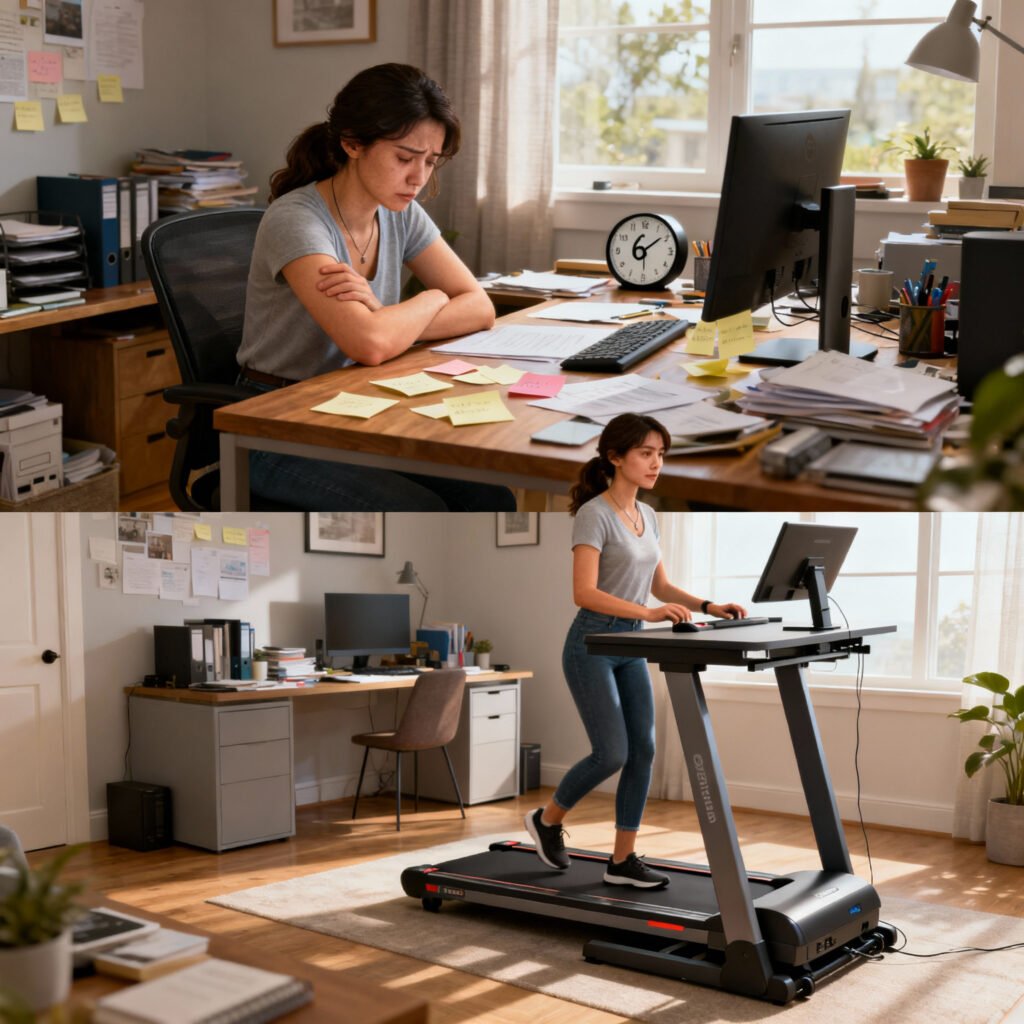
My afternoon energy crashes disappeared.
My focus lasted longer.
My posture improved without me even trying.
It wasn’t a dramatic fitness journey — it was a quiet, steady return to feeling good in my body again.
And that’s what this is really about — not perfection, but progress.
🧭 Additional Tips for Staying Active Without Overwhelm
Here are a few extra hacks I picked up:
Hydrate often. Every time you refill your bottle, take 10 steps or do a quick stretch.
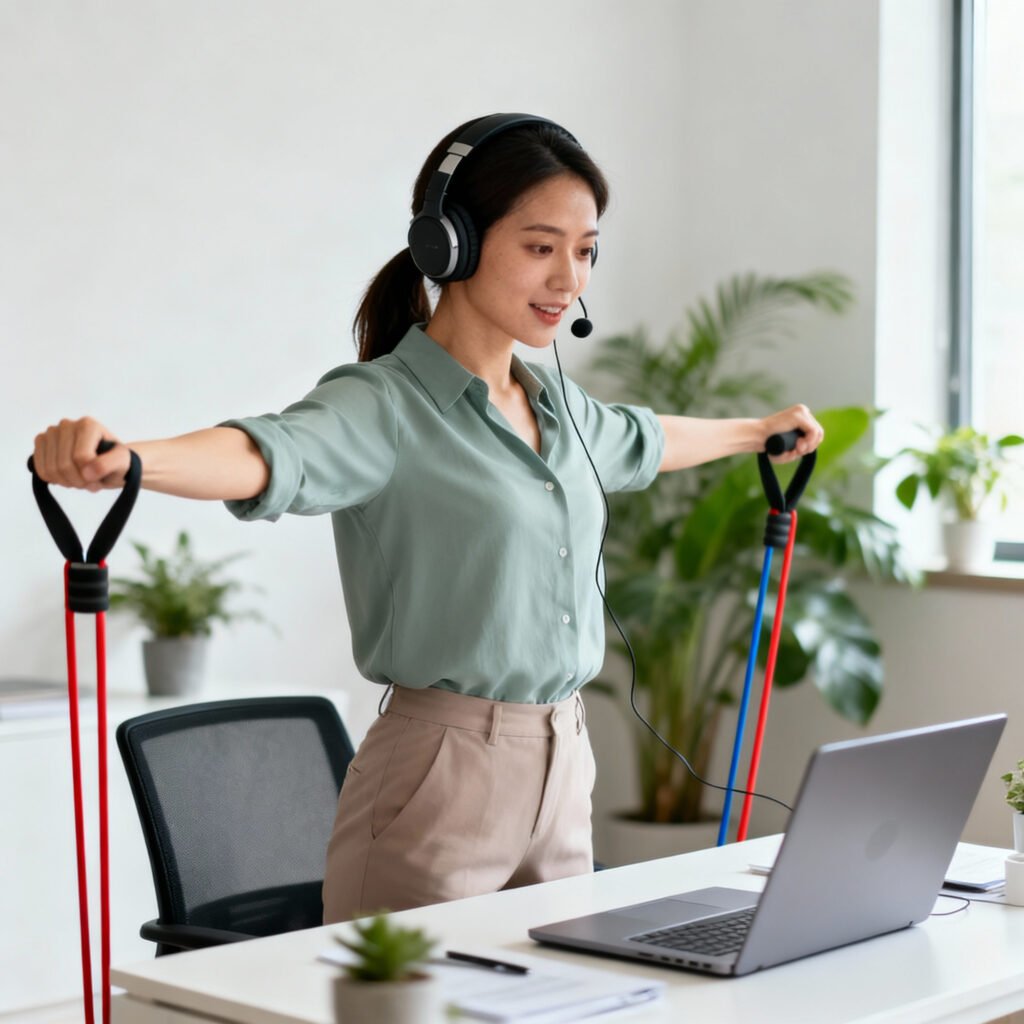
Keep resistance bands at your desk for quick shoulder and arm exercises.
Play energizing music. Moving feels natural when the rhythm lifts your mood.
Stand during video calls. Your posture and presence instantly improve.
Celebrate movement moments. Treat walking, stretching, or dancing like wins — because they are.
Before long, these mini-habits become the foundation of a lifestyle that feels both productive and alive.
🏁 The Bottom Line
Working from home doesn’t mean working yourself into stiffness.
The secret isn’t willpower — it’s designing your day around natural movement.
💡 When your environment supports your body, your body supports your mind.
Start small:
Stand while you read emails.
Walk while you brainstorm.
Stretch when you hit “send.”
Then, let the tools help you:
A standing desk for flexibility.
A posture corrector for alignment.
An under-desk treadmill for easy daily motion.
🧠 Remember: Energy isn’t something you find — it’s something you create through movement.
So, get up. Roll your shoulders. Take that first step — even if it’s just across your living room.
Your body (and future self) will thank you for it.
Frequently Asked Questions
🛍️ Recommended Amazon Essentials
| Product | Why It Helps | Quick Description |
|---|---|---|
| WalkingPad Under-Desk Treadmill | Burn calories & boost focus while you work | Quiet, compact, fits under most desks |
| FlexiSpot Standing Desk Converter | Switch easily between sitting and standing | Adjustable height, ergonomic design |
| ComfyBrace Posture Corrector | Prevent back pain and slouching | Lightweight, adjustable for all-day comfort |
| Resistance Bands | Great for toning your arms, shoulders, chest, gluts, legs | Strong wear resistance and perfect elasticity |



AFFILIATE DISCLOSURE
themindsparkcollective.net is a participant in the Amazon Services LLC Associates Program, an affiliate advertising program designed to provide a means for sites to earn advertising fees by advertising and linking to Amazon.com.
I may earn a small commission for my endorsement, recommendation, testimonial, and/or link to any products or services from this website.
Last Updated on October 31, 2025 by The Mindspark Collective